Fly Fishing Accessories for Beginners: Starter Checklist
By RiffleDge . 10 min read . Updated June 2026
A fly rod and reel will get you to the water, but the accessories are what keep you there and fishing rather than tangled on the bank. This checklist covers the 12 things a beginning fly angler should own before a first real trip, in rough priority order. Most are inexpensive consumables; a few are small gear investments that will outlast the rod. Start with tippet, a nipper, and a net if you plan to release fish, then work down the list. Every slug here links to a full review so you can dig deeper on any piece before buying.
The short answer
The must-have beginner fly fishing accessories are tippet, a nipper, forceps for hook removal, a floatant for dry flies, a strike indicator for nymphing, and a fish-safe landing net. A chest pack or sling pack rounds out the kit. The RIO Powerflex Plus Tippet and Dr. Slick Cyclone Nipper are the community-standard first buys in their categories.
This guide contains affiliate links. RiffleDge may earn a commission at no cost to you.
1. Tippet: the consumable you will replace every season
Tippet is the thin uniform-diameter material you tie to the end of your leader and then tie your fly to. You buy it in small spools and trim a few inches every time you change flies, so a 30-yard spool disappears over a full season of trout fishing. Get two or three sizes: 4X for bigger nymphs, 5X for most dry flies, and 6X for small midges and spring creek work.
RIO Powerflex Plus Tippet is the community standard for monofilament dry fly tippet. It has consistent diameter, reliable breaking strength, and the nylon stretch that cushions the hook set on light 5X and 6X. If you plan to fish nymphs and streamers below the surface, add a spool of RIO Fluoroflex Plus Tippet , which sinks instead of floating. Beginners fishing on a tight budget can stretch their dollars with Seaguar InvizX Fluorocarbon Tippet for the fluorocarbon work, buying eight times more material per dollar at the cost of needing to wind it onto a smaller holder yourself.
For volume buyers, the RIO Powerflex Tippet Guide Spool (110-yard) gives you 110 yards per spool rather than 30, which pencils out much better once you fish more than a handful of days per season.

RIO Powerflex Plus Tippet
The most widely recommended nylon monofilament tippet in fly fishing, offering consistent diameter, reliable knot strength, and enough stretch to cushion the hook set on light tippets.
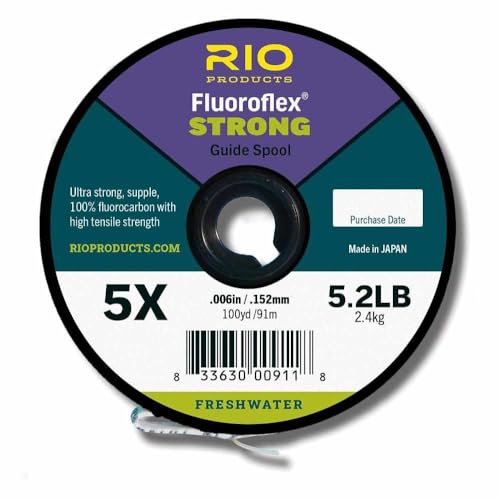
RIO Fluoroflex Plus Tippet
A high-performance 100 percent fluorocarbon tippet from RIO with low visibility underwater and high knot strength for subsurface nymph and streamer applications.

RIO Powerflex Tippet (Standard 30-yard Spool)
The standard 30-yard spool of RIO Powerflex nylon monofilament, the everyday choice for anglers who buy tippet by the spool and rotate sizes frequently during a day on the water.
2. Nippers: the tool you will use on every single cast change
A nipper is a compact cutting tool for trimming tippet tag ends and cutting line. You reach for it every time you change flies, which on an active day can be dozens of times. A bad nipper is the most frustrating small tool in fly fishing: cheap stainless blades dull within a few outings on fluorocarbon, leaving you chewing line with your teeth.
Dr. Slick Cyclone Nipper solves this with a ceramic cutting edge that stays sharp far longer than steel, plus a built-in hook eye cleaning needle for clearing varnish from small hook eyes. Pair it with a Loon Outdoors Rogue Zinger retractor clipped to your vest or pack so the nipper is always at arm's length. A zinger lets you pull the tool out, use it, and let go without searching a pocket while a trout is on.

Dr. Slick Cyclone Nipper
A precision fly fishing nipper with a ceramic cutting edge that stays sharp far longer than stainless steel, plus a hook eye cleaning needle built into the handle for clearing varnish from small hooks.

Loon Outdoors Rogue Zinger
A heavy-duty zinger retractor with a 22-inch steel cable and an S-Biner attachment for attaching nippers, hemostats, or a hook sharpener to a vest or pack with instant pull-and-release access.
3. Forceps or hemostats: mandatory for safe catch-and-release
Forceps are the locking pliers that clamp onto a hook bend and rotate it out of a fish's lip cleanly. Without them, removing a small barbless hook from a squirming trout becomes a fumble that stresses the fish and risks losing it. They also double as a barb-crimping tool on any hook you want to make barbless.
Dr. Slick Spring Creek Hemostat is the standard 5-inch curved choice for freshwater trout: the curved tip rotates hooks out of awkward angles, and the locking ratchet holds the fly without constant grip. If you fish in cold water where numb fingers make opening standard hemostats slow and awkward, the spring-loaded Loon Outdoors Rogue Quickdraw Forceps open automatically when you release your grip and are worth the small premium in early-season and winter conditions.

Dr. Slick Spring Creek Hemostat
A 5-inch curved hemostat for fly fishing hook removal and barbless hook crimping, with a locking mechanism that holds the fly during hook removal without fumbling.
Loon Outdoors Rogue Quickdraw Forceps
Spring-loaded forceps that open automatically when you release grip, speeding up hook removal in cold water when stiff fingers make manual opening slow.
4. Fly floatant: keep your dry flies on the surface film
Fly floatant is the material you apply to a dry fly before the first cast to coat the hackle fibers and elk hair that keep it floating. Without it, most dry flies sink after a fish takes them or after a few drifts in broken water. There are two types you need to own: a gel for fresh application and a powder desiccant for reviving waterlogged flies mid-session.
Loon Outdoors Aquel Premium Floatant is the go-to gel: water-based, it stays liquid in cold temperatures where Gink and other oil-based gels stiffen and become hard to apply. It coats hackle fibers without matting them. When a fly has been drowned repeatedly and the gel will not bring it back, Frog's Fanny Dry Fly Floatant is the fix: shake the fly in the powder for a few seconds and it comes out dry enough to fish again. These two together cover almost every dry fly situation.
For anyone who fishes CDC patterns, which oil-based gels will ruin by collapsing the delicate fibers, the Loon Outdoors Lochsa Floatant is the correct tool. It treats CDC without matting and is worth the few extra dollars if CDC midges, Comparaduns, or parachute-style flies are in your box.

Loon Outdoors Aquel Premium Floatant
The default gel floatant for most fly fishers: water-based, easy to apply to hackle fibers, and stays liquid enough to use in cold temperatures where oil-based gels become stiff.

Frog's Fanny Dry Fly Floatant
A powder desiccant floatant for reviving waterlogged flies mid-session and treating CDC and deer hair patterns that oil-based gels will ruin by matting the fibers.

Loon Outdoors Lochsa Floatant
A CDC-specific floatant that coats the delicate fibers of CDC-winged and parachute patterns without matting them, keeping fine-fiber flies floating through multiple drifts.
5. A strike indicator for learning nymph fishing
Nymphing, fishing flies below the surface to imitate larvae and pupae, is the most consistent way to catch trout and is especially valuable for beginners because the fish are feeding subsurface for the majority of the day. A strike indicator sits on the leader and dips or pauses when a fish takes the nymph, giving you a visual signal to set the hook.
The Thingamabobber Strike Indicator is the universal starting point: push-on loop attachment is the fastest setup, the hollow plastic is highly visible in choppy water, and they are cheap enough to lose a few without frustration. As you improve, switching to the lower-profile Oros Strike Indicators will reduce the hinge point the Thingamabobber creates in the leader and improve subtle take detection in slower, flatter water.

Thingamabobber Strike Indicator
The classic hollow plastic bubble indicator found in nearly every fly shop, easy to attach via a push-on loop and highly visible in choppy water.

Oros Strike Indicators
A round foam indicator with the line encapsulated internally and no small parts to lose on the water, designed to attach and reposition cleanly without creating a hinge point in the leader.
6. A landing net: protect the fish and your hook points
A landing net is how you finish landing a trout safely, keep it in the water for a quick photo, and release it unharmed. A fish swiped across a rocky riverbed or gripped dry with bare hands loses slime coat and is far more likely to die after release. The net is not optional for ethical catch-and-release.
For a first net, the Rising Brookie Net gives you a fish-safe rubber basket at a mid-range price that does not require the Fishpond premium. If budget allows, the Fishpond Nomad Emerger Net 2.0 is the community benchmark: carbon fiber frame that floats if you drop it, a 15.5 by 10.5 inch TPU rubber hoop, and the same net the guide community carries. Attach it to your pack or vest with a Fishpond Confluence Net Release 2.0 so it hangs at your side and deploys instantly when a fish is on.

Rising Brookie Net
A lightweight rubber-basket net at a mid-range price point, sized for stream trout and well suited for anglers who want the fish-safe rubber without the Fishpond premium.

Fishpond Nomad Emerger Net 2.0
The community standard for wade anglers, a carbon fiber and fiberglass frame that floats with a fish-safe TPU rubber basket and a 15.5 by 10.5 inch hoop that handles most trout cleanly.

Fishpond Confluence Net Release 2.0
A magnetic net release that holds 11 pounds of pull force, attaches to any vest or pack, and releases instantly single-handed when a fish is on.
7. A pack to carry all of the above
You need something to carry two or three fly boxes, the tippet spools, the floatant, the tools, and a snack. For a first-season angler, the Allen Company Fall River Fly Fishing Chest Pack at under $40 is a practical starting point: a fold-down workstation for rigging, a built-in fly patch, and enough organization to keep your most-used gear accessible without overspending before you know what pockets you actually reach for. Upgrade once you understand what you need.
If you are ready to start with a proper sling or vest from day one, the Simms Freestone Vest is the benchmark traditional vest with 22 pockets and a tippet caddy, while the Simms Tributary Sling Pack is the better choice for anyone who plans to hike to water and wants to keep the single-strap rotation-to-front convenience.

Allen Company Fall River Fly Fishing Chest Pack
A budget chest pack under $40 with a fold-down workstation, multiple mesh pockets, and a built-in fly patch. The entry-level pick for beginners getting organized on the water.

Simms Freestone Vest
A workhorse 22-pocket vest from one of the most trusted names in fly fishing, with a tippet caddy, magnetic docking stations for tools, and loop velcro for wet fly storage.

Simms Tributary Sling Pack
An updated everyday sling pack from Simms at $130, balancing a hiking-comfortable single strap with enough organization for a full day on the water at a mid-tier price.
8. A water thermometer: the tool with real ethics behind it
Trout are cold-water fish and above 67 to 68 degrees Fahrenheit, the stress of being caught and handled during catch-and-release increases significantly. Many rivers impose hoot owl restrictions in summer, closing to fishing after 2 PM when afternoon heat pushes water temperature past that threshold. An Orvis Stream Thermometer is a two-second check before you start fishing and a ten-second check mid-afternoon that tells you whether to stay on the water or leave the fish alone. It costs $10 to $15 and requires no batteries.
This is the gear item most beginners skip and most experienced anglers consider essential. Add it to the first order.
Orvis Stream Thermometer
A compact pocket-sized stream thermometer that clips to a vest or pack and provides an instant water temperature reading for catch-and-release decision-making during hoot owl conditions.
Featured in this guide
RIO Powerflex Plus Tippet
The most widely recommended nylon monofilament tippet in fly fishing, offering consistent diameter, reliable knot strength, and enough stretch to cushion the hook set on light tippets.
Dr. Slick Cyclone Nipper
A precision fly fishing nipper with a ceramic cutting edge that stays sharp far longer than stainless steel, plus a hook eye cleaning needle built into the handle for clearing varnish from small hooks.
Dr. Slick Spring Creek Hemostat
A 5-inch curved hemostat for fly fishing hook removal and barbless hook crimping, with a locking mechanism that holds the fly during hook removal without fumbling.
Loon Outdoors Aquel Premium Floatant
The default gel floatant for most fly fishers: water-based, easy to apply to hackle fibers, and stays liquid enough to use in cold temperatures where oil-based gels become stiff.
Fishpond Nomad Emerger Net 2.0
The community standard for wade anglers, a carbon fiber and fiberglass frame that floats with a fish-safe TPU rubber basket and a 15.5 by 10.5 inch hoop that handles most trout cleanly.
Allen Company Fall River Fly Fishing Chest Pack
A budget chest pack under $40 with a fold-down workstation, multiple mesh pockets, and a built-in fly patch. The entry-level pick for beginners getting organized on the water.
Thingamabobber Strike Indicator
The classic hollow plastic bubble indicator found in nearly every fly shop, easy to attach via a push-on loop and highly visible in choppy water.
Orvis Stream Thermometer
A compact pocket-sized stream thermometer that clips to a vest or pack and provides an instant water temperature reading for catch-and-release decision-making during hoot owl conditions.
Related roundups
FAQ
Frequently asked questions
What accessories does a beginning fly angler really need for the first trip?+
The non-negotiables are tippet material in two or three sizes, a nipper to cut it, forceps for hook removal, floatant for dry flies, and a net for safe fish handling. Everything else can wait. The RIO Powerflex Plus Tippet and Dr. Slick Cyclone Nipper are the two most universally recommended first purchases in the community.
How much does a basic fly fishing accessory kit cost?+
A functional starter kit covering tippet, nipper, forceps, floatant, indicators, and a basic net runs roughly $80 to $120 if you choose mid-range items in each category. Upgrading to a Fishpond Nomad Emerger net and a Simms vest adds another $300 or more. Most beginners do better starting with the functional kit and upgrading individual pieces as they learn what they actually use.
Do I need waders to start fly fishing?+
No. Many rivers can be fished by wet wading in shorts and sandals or dedicated wading shoes during warmer months. Waders are important for cold water, winter fishing, and rivers where crossing deep seams is part of reaching fish. For a first-season angler starting in late spring or summer, wet wading is a reasonable way to start before investing in breathable waders.
What is a tippet holder and do I need one?+
A tippet holder is a small dispenser that clips to your vest or pack and holds multiple spool sizes in one place, so you can pull from 4X, 5X, or 6X with one hand without digging into a pocket. The Fishpond Headgate Tippet Holder comes pre-loaded with RIO Powerflex spools in five sizes and is worth it for anyone fishing frequently. Beginners on tight budgets can simply store spools in a vest pocket and add a holder when they know which sizes they use.